R&D Projects

Areas the research and production centre is currently working on: new processes, prototypes and joint projects with institutes.

PL-DigiLabCore digital platform for the metallographic laboratory

PL-DigiLabCore digital platform for the metallographic laboratory

Stage: Deployed within the complex

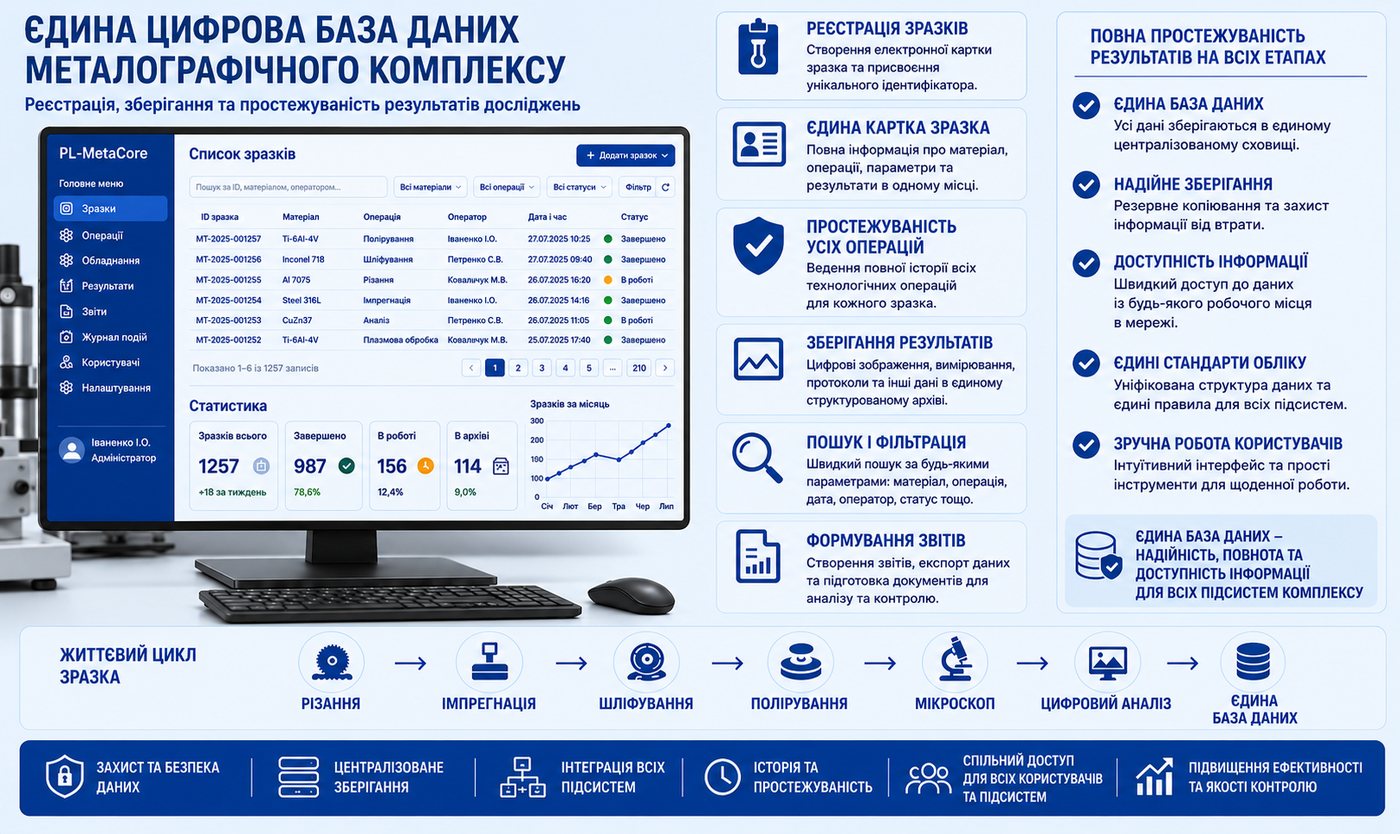
A unified information system that turns a laboratory from a set of separate instruments into digital production. Every unit sends its process parameters to a shared database through a digital integration module.

A sample receives a unique identifier at registration, and from then on the system keeps its history: which operation, with which parameters, when and by whom. Data exchange runs over Ethernet 10/100Base-T using Modbus TCP.

Development direction: connecting third-party equipment, remote monitoring of instrument status, analytics across the accumulated research database.

PDF Photos: 3
Digital equipment integration modules (DIM)

Digital equipment integration modules (DIM)

Stage: Serial deployment

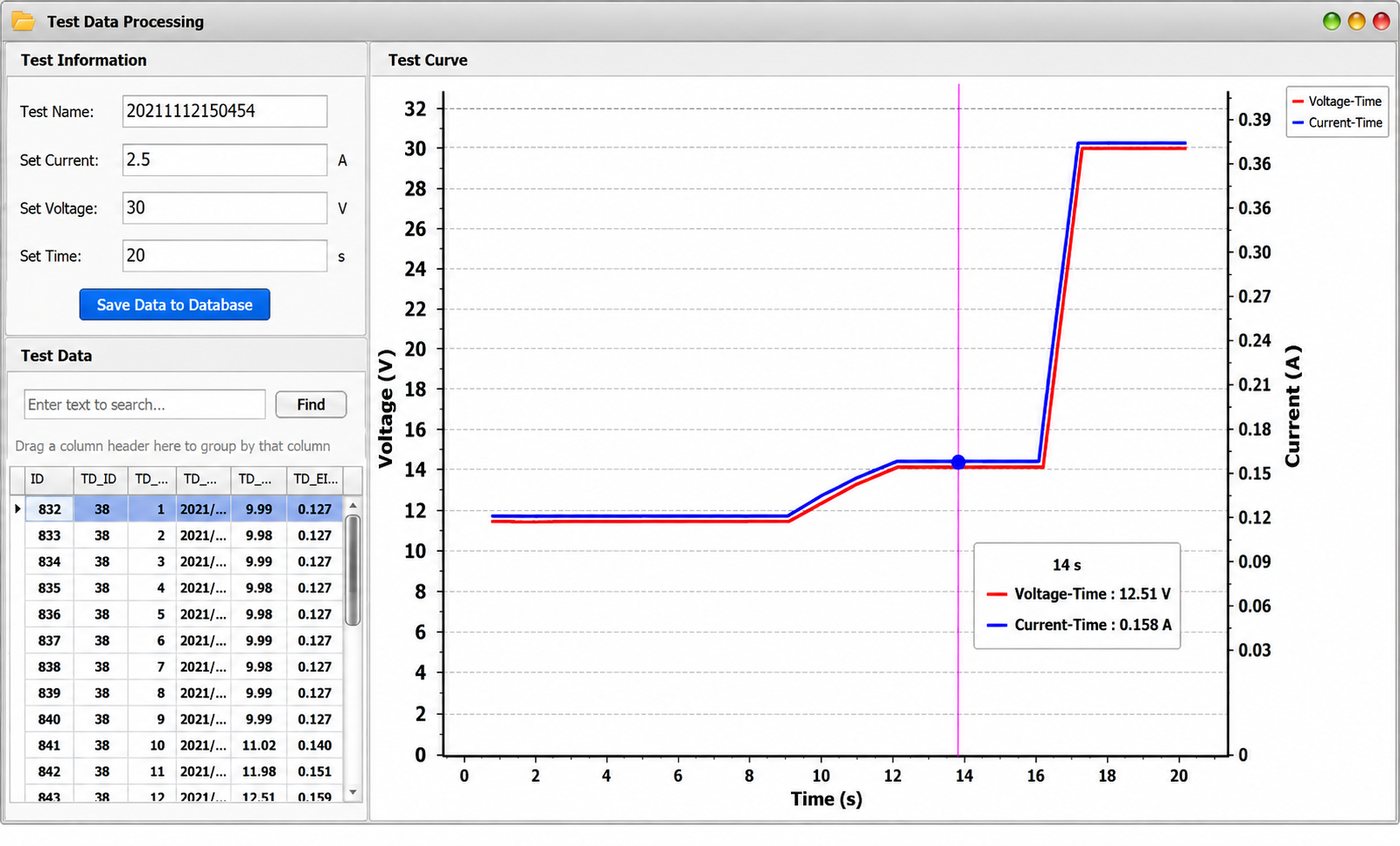
An in-house development: a compact module that reads process parameters from an instrument and sends them to the central database without operator involvement. Every unit of the complex has its own version — PL-PrecisCut 200-DIM, PL-Mount H22-DIM, PL-GP2/250-DIM and others.

These modules are what make the digital sample passport possible: without them the data would have to be transferred by hand, with the inevitable errors and gaps.

Development direction: a universal module for connecting third-party equipment in a laboratory the customer already operates.

Photos: 2
Vacuum-free plasma and electrochemical surface preparation

Vacuum-free plasma and electrochemical surface preparation

Stage: Pilot production use

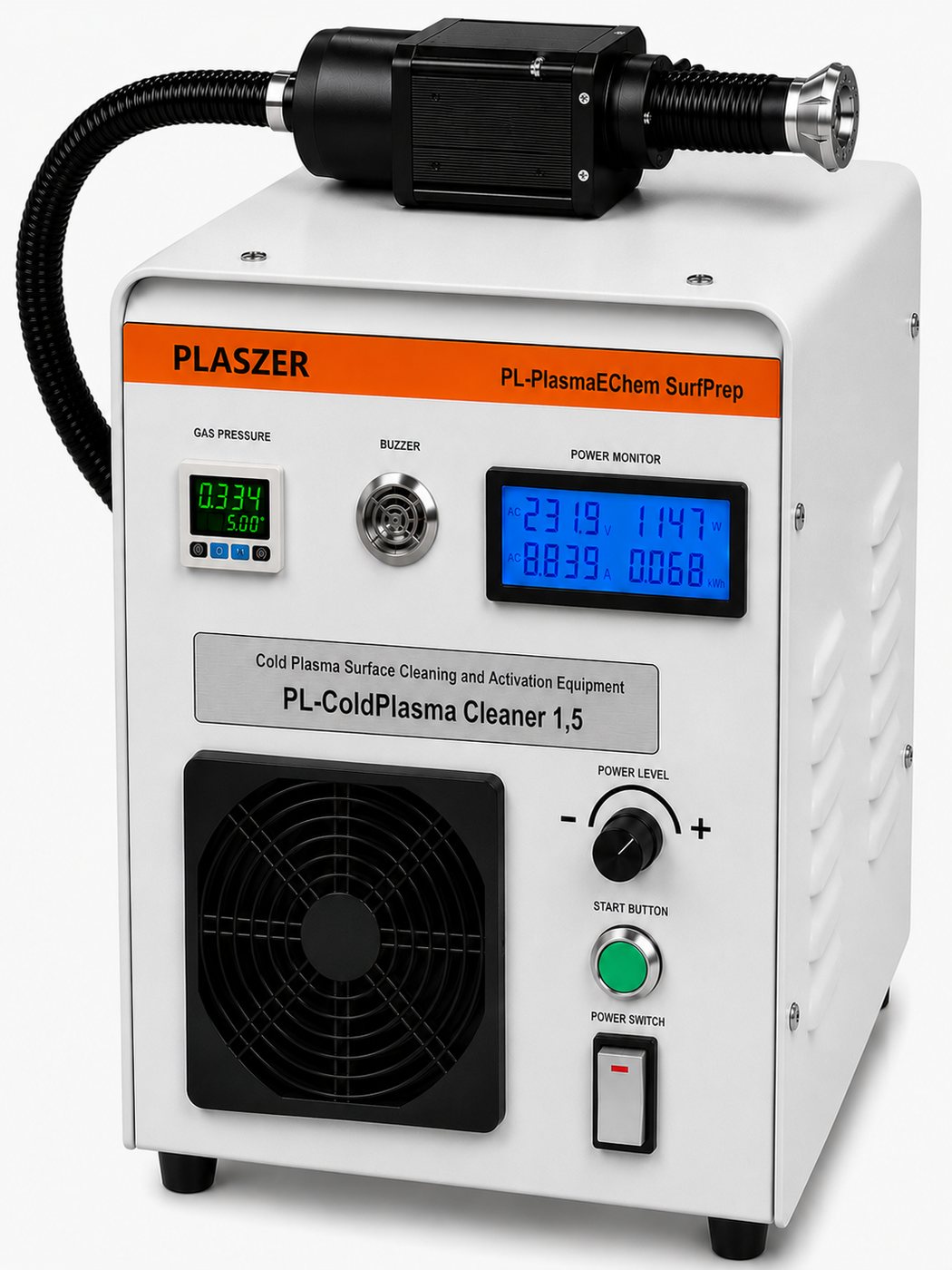
Classic plasma processing methods require vacuum chambers — expensive, slow and limiting in sample size. We are refining treatment with atmospheric plasma: the same surface cleaning and activation, but without vacuum.

Paired with electrochemical polishing, the method yields a surface with Ra 0.1–0.4 µm roughness and no cold work or deformed layer — the structure under the microscope is seen as it truly is. Process parameter stability is 5–10 %.

Development direction: extending the range of alloys and selecting electrolytes for non-standard materials.

Photos: 2
Plasma 3D printing of heat-resistant steel parts

Plasma 3D printing of heat-resistant steel parts

Stage: Research and development

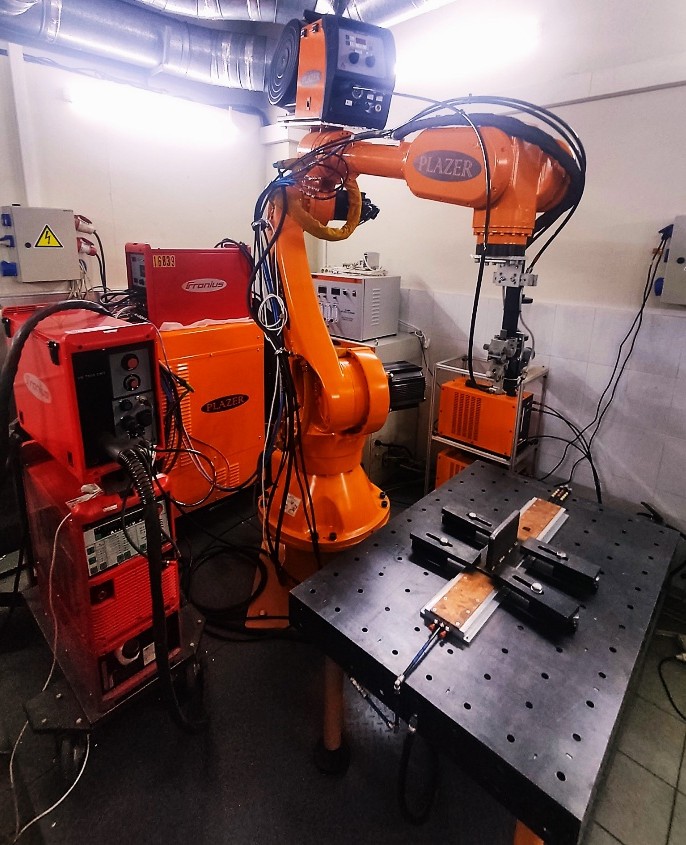
Layer-by-layer deposition synthesis of heat-resistant steel parts by the plasma arc method — a direction the centre pursues jointly with research institutes.

Application: manufacture and restoration of gas turbine engine and special equipment parts for which no ready technological solutions exist.

The PL-MetCore metallographic complex serves as the control instrument here: the structure of the deposited metal is examined at every iteration of the process modes.

Photos: 4

Looking for a partner for a research project?

We take on tasks for which no ready-made equipment exists yet. Write to us — let us discuss it.

Contact us